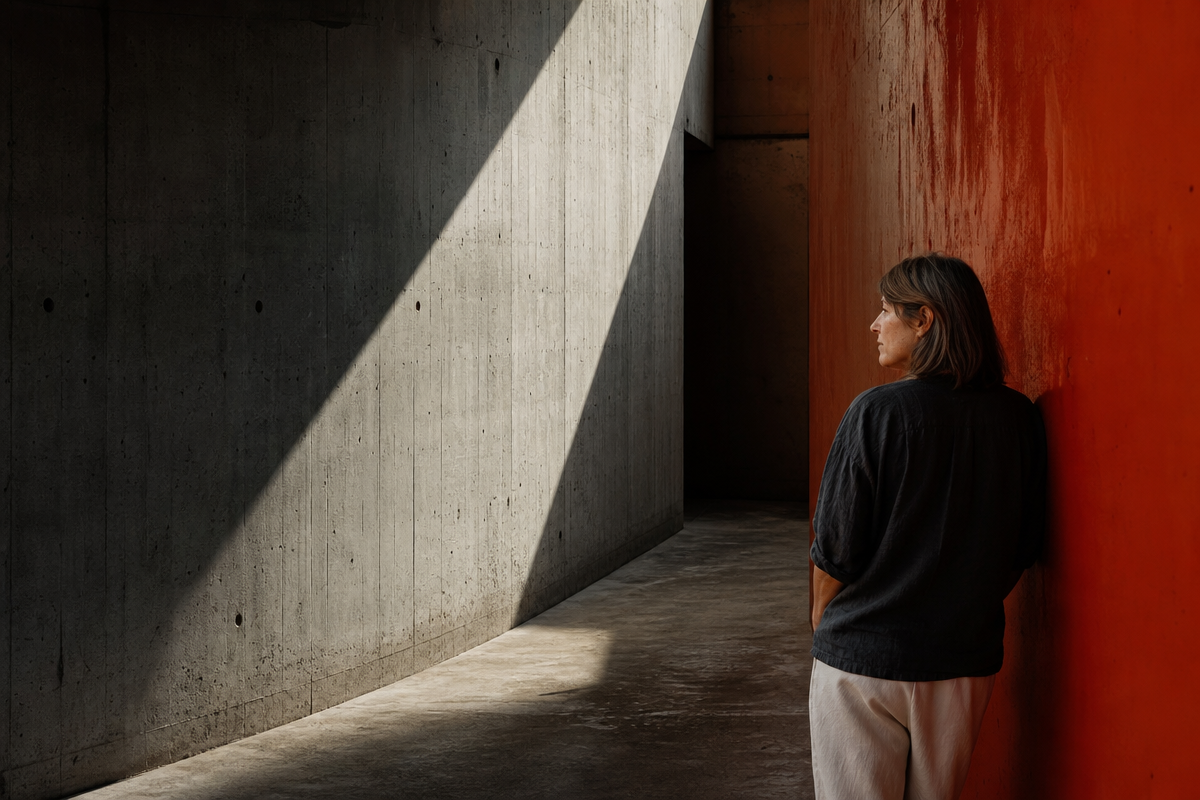
Somatic Coherence
A practice for a whole life
01 / Recognition
A nervous-system practice for people who look fine on paper
Functioning
isn't living.
Understanding is useful. It is not the same as an experience in your body, in real time. This is whole-self work for the part no explanation can reach alone.
The work is not the destination. Life is.
02 / Curiosity
The question beneath the competence
You can be highly capable, productive, responsible and functional — and still be living largely through adaptations.
The work begins when the version of you everyone relies on is no longer the only version allowed to exist.
03 / The visual record
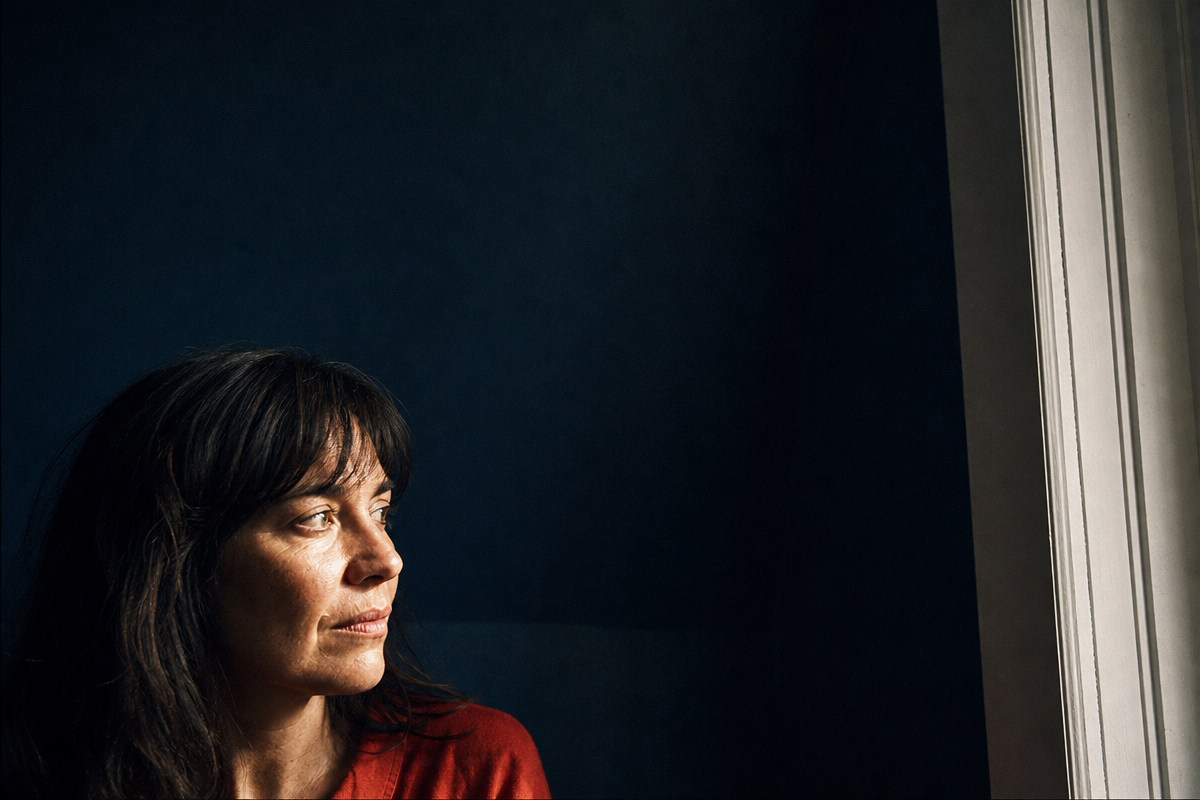
A body in the world.
Stillness / movement / return


04 / Recognition
The part still braced, still scanning, still exhausted does not speak in words.
Your body isn't waiting to be fixed. It's waiting to be heard.
You've spent years acquiring insight. You know the patterns, the names, the mechanisms. And still, something hasn't moved. That's not a failure of effort. It's a mismatch of method.
The part of you that's still braced, still scanning, still exhausted doesn't speak in words. It speaks in sensation, in signaling, in the moment before a thought forms.
That's where this work meets you.
Your body isn't waiting to be fixed. It's waiting to be heard. When it finally has room to move, it knows exactly what to do.
Life can feel better. Not managed. Better. The moment you step out of their story and into yours.
05 / Maintenance
You don't have to be broken for something to need maintenance.
Everyone experiences stress. Everyone adapts. People suppress, perform, accommodate, over-function, disconnect, push through and carry unfinished experiences.
Nervous-system care is maintenance. Nervous-system fitness is tuning the instrument while life keeps happening. The depth and consequences vary enormously. Trauma is not minimized by making care universal.

06 / Aliveness
Life happening beyond the screen.
The aim is not to turn your entire life into a project of healing. The aim is to participate in it.

Laura Lane / Meet Laura07
07 / Meet Laura
The work is not the destination. Life is.
Laura Lane
Somatic Trauma-Informed Coach • Narcissistic Abuse Specialist
30+ years of working with the body, human behavior, and the patterns that shape how we live.
My work sits at the intersection of somatic psychology, neurophysiology, trauma, and nervous-system regulation.
I work with people who may look highly functional from the outside while something deeper is asking for attention—chronic stress, nervous-system dysregulation, trauma, C-PTSD, the effects of narcissistic abuse or coercive control, or simply the accumulated weight of living in survival mode for too long.
08 / Clinical depth
The nervous system is a master key. It is not the whole map.
The whole person is the room.
Somatic psychology starts with a simple fact: psychological experience becomes embodied. Stress physiology, neurophysiology and HPA-axis function shape attention, behavior, relationships, recovery and quality of life.
The nervous system can be a master key — a way into what words alone cannot reach. It does not explain everything. Whole-self work keeps the larger framework in view.
Talk approaches start at the top — the thinking brain — and hope change trickles down. Lasting change moves from the body up. Survival patterns were not installed through words, and words alone cannot reach them.
The work moves at your body's pace — that isn't a courtesy, it's the method. A nervous system releases what it holds only when it feels, at the level of physiology, that the threat is over.
Nothing is extracted, nothing is demanded, and every step is taken in doses your body can integrate. Survival responses that never got to finish can complete and discharge. The alarm recalibrates to the present.
Coherence is not a performance. It is a body that has stopped fighting a war that ended.
09 / Coercive control
You were repeatedly told who you were — and expected to defend yourself against it.
Leave the courtroom.
accusation → defend → explain → prove → appease → recover → accusation
The cycle is not a courtroom you have to keep winning.
Maybe you are no-contact and grieving people who are still alive. Maybe you are low-contact and paying for every visit with a week of symptoms after. Maybe you are still inside it, reading this quietly, competently, while no one around you knows.
The answer is not becoming better at defending yourself. It is stepping out of the cycle. Who are you when you are not defending yourself?
10 / The body kept the record
The résumé version is not the whole person.
This work is for people who lived inside a predatory system — a family, a partner, a workplace, a friendship that was never what it claimed to be — and whose bodies are still living there.
For some, it started at birth. For others, it took a relationship — the one that dismantled you — before you could see the pattern had been running longer than you knew. Many people find this work through a partner, and only then recognize where the training began.
You know the résumé version of yourself: capable, accomplished, the one everyone counts on. Here is the version only you know. The fatigue no amount of sleep repairs. The pain and inflammation that migrate and return. Hormones that won't stabilize. Brain fog that arrives mid-sentence. The constant low hum of anticipation.
You have done the work. Probably years of it. You can name the roles, explain the gaslighting, recite your patterns like a case study. Understanding was supposed to be the way out — and yet your body never got the message.
Your body is not malfunctioning. It is responding, faithfully, to a history that was real. The work is teaching it, at the level where it listens, that the history is over.
Presence at your own life is not a small outcome.
11 / Integration
A different layer of support.
Do I have to talk about the details of what happened?
No. You will not be asked to relive every detail of your story. What feels important has its place, and you decide what that is — but this work reads the body, not the transcript. Many clients do their deepest work here having said very little.
I’ve been in therapy for years. How is this different?
It's not a replacement for therapy — it's a different layer. Talk approaches work with the thinking mind; this work goes to the nervous system, where survival patterns actually live and where insight alone can't reach. Many clients do this work alongside a therapist, and each makes the other more effective.
What if I get overwhelmed?
Then we're moving too fast, and we slow down — that's not a setback, it's the method working. This work is built on titration: approaching things in doses your body can integrate. And you're not left alone afterward: every session includes a follow-up check-in call, because the days after a session are part of the work.
I'm not even sure what I lived through “counts.” Do I qualify?
The label matters less than the pattern. If love or approval was conditional, your perception was punished, and you came out fluent in everyone’s needs but your own — the work applies, whether that happened in a family, a marriage, a workplace, or somewhere no one else could see. Some people arrive certain; many arrive doubting, because doubting is what those systems teach. Doubt doesn’t disqualify you.
What happens in a session?
A session is a guided conversation with your nervous system — slower and quieter than most people expect. We work with what your body is presenting: sensation, tension, breath, image, state. Nothing is forced, nothing is extracted, and you remain in the lead throughout. Sessions are held virtually, and the work is fully effective online.
How long does it take?
Honestly: it depends on the nervous system, and yours will set the pace. Some people feel a shift within the first sessions; the deeper repatterning is a longer arc — this is recovery, not a technique. What I can tell you is that the pace is real: we go as fast as your body can integrate and no faster, because that's the only speed that lasts.
Is this therapy?
No. I'm a certified somatic trauma-informed coach and narcissistic abuse specialist, not a licensed psychotherapist — I don't diagnose or treat mental illness. If a licensed therapist is the right support for what I see, I'll tell you honestly. This practice works alongside therapy and medical care, never in place of them.
12 / Aliveness
The work is not the destination.
Life is.
You do not need perfect words to begin. You need a place to start.